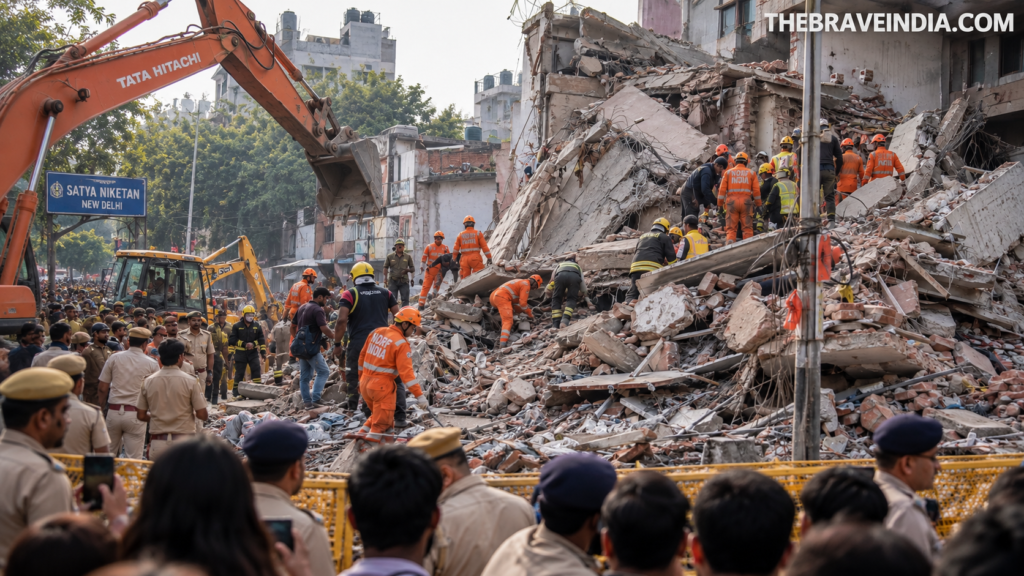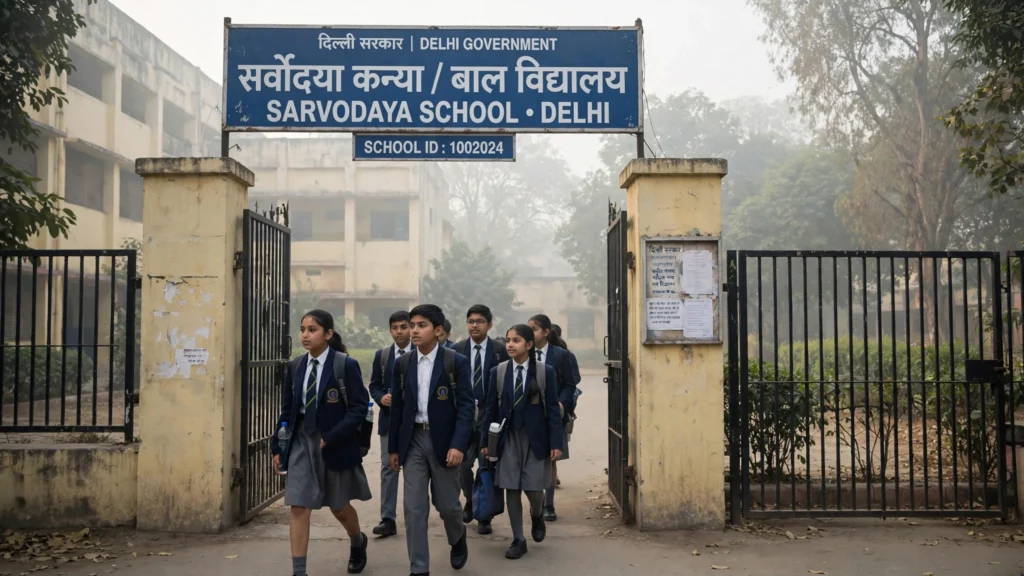
Delhi schools reopen for offline classes today. School mornings across Delhi and the National Capital Region look familiar again. Bags packed the night before, uniforms ironed, tiffins ready, and children heading out of the gate instead of logging in from the dining table. After nearly two weeks of disrupted routines, regular offline classes are back — and for parents who have been juggling work calls with home lessons, that change alone is a relief.
The reason is straightforward. Air quality has improved enough for the Commission for Air Quality Management, or CAQM, to lift its strictest emergency curbs. That decision, taken on 17 November 2026, has set off orders from education departments across Delhi and the neighbouring NCR districts: stop the online and hybrid arrangements and return to normal teaching, with immediate effect. Here is what was revoked, what is still in force, which schools are covered, and what families should expect next.
What changed on 17 November
The CAQM revoked Stage-III restrictions under the Graded Response Action Plan, known as GRAP, on 17 November 2026, with immediate effect, citing sustained improvement in air quality. Delhi’s daily average air quality index, or AQI, had improved to 204 — out of the severe category and in the poor range.
That number marks a clear shift from the conditions that triggered the emergency measures. An AQI of 204 is still far from clean air, and no one involved is pretending otherwise. But it is no longer in the band that called for Stage-III curbs, and the Commission acted on that improvement rather than waiting for a perfect reading. The order took effect immediately, so schools did not have to wait for a further instruction to plan the return to classrooms.
The 11 days under Stage-III
GRAP Stage-III had been imposed on 6 November 2026, ahead of Diwali, so it was in force for 11 days before it was lifted. Those 11 days covered the festival period and the days immediately after it, when air quality in the region is usually at its most difficult and schools have to adjust quickly.
For schools, that meant a break from the normal rhythm. Classes moved online or into a hybrid pattern, teachers prepared lessons that worked in both settings, and parents rearranged mornings to supervise younger children. Eleven days may not sound long, but in a household with two working parents and a child in primary school, it feels much longer. The return to offline classes is therefore not only an administrative change, but a return to a timetable families can plan around and to the face-to-face teaching children miss most on a screen.
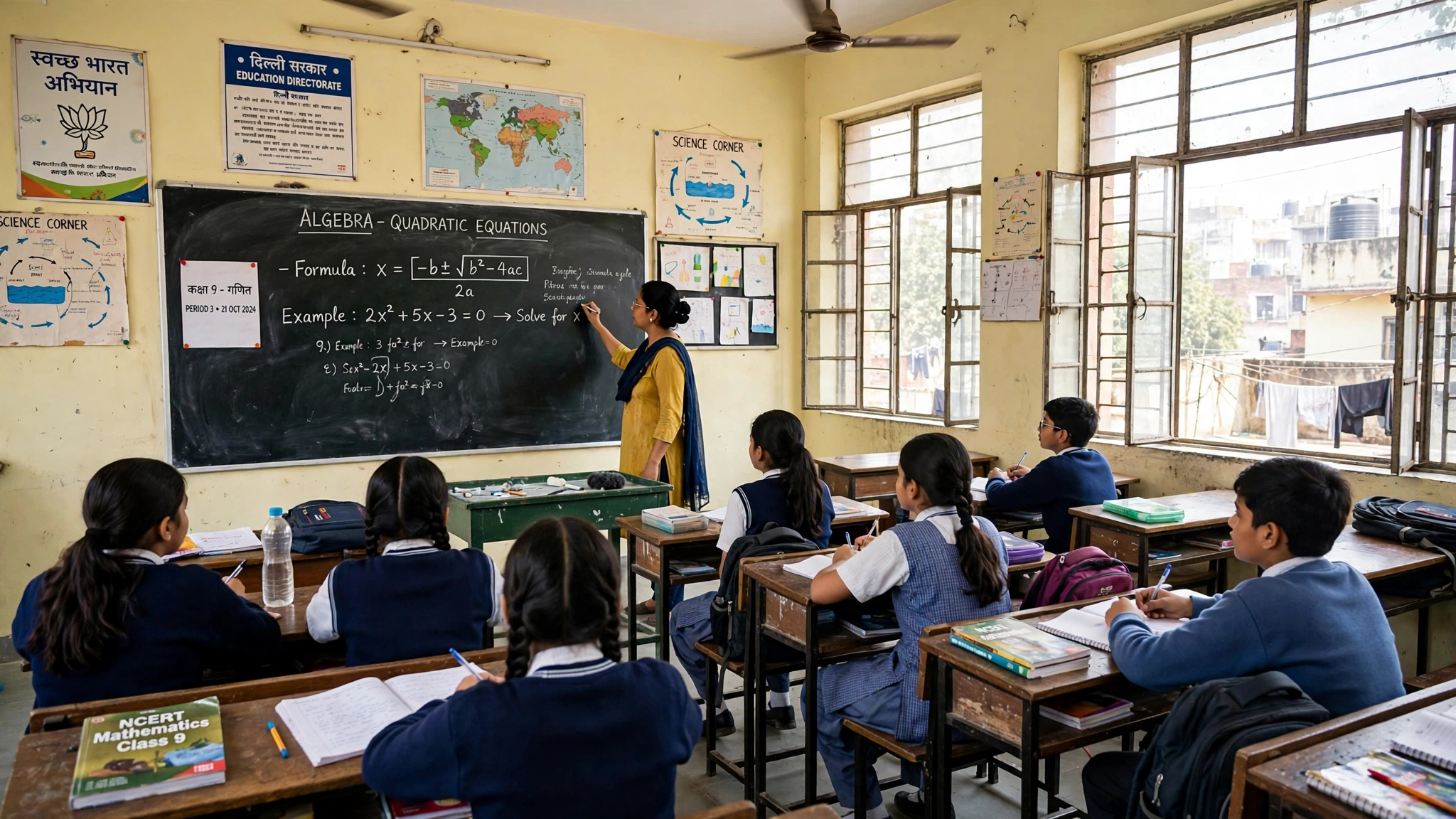
Delhi schools reopen: What schools in Delhi have been told to do
Following the revocation, the Delhi Directorate of Education, or DoE, directed all government, government-aided, municipal and recognised private schools to discontinue online and hybrid arrangements and restore normal offline teaching with immediate effect. The instruction is direct: the temporary arrangements are over, and regular classroom teaching is to resume.
The order covers schools under the Delhi government, the Municipal Corporation of Delhi, known as MCD, the New Delhi Municipal Council, or NDMC, the Cantonment Board and recognised private institutions. It is not limited to one type of school or one part of the city. Parents unsure about timings or transport should check the notice from their child’s own school, which will set out the practical details for its classes.
Noida and Greater Noida follow the same path
The change is not limited to Delhi. The Gautam Buddha Nagar District Basic Education Officer similarly directed schools in Noida and Greater Noida to restore regular classes, ending the hybrid arrangement for students up to Class 5. That matters most to families with younger children, who were most affected by the hybrid pattern and whose parents faced the hardest task supervising learning at home.
The directions apply across Delhi and the NCR districts of Gurugram, Faridabad, Ghaziabad and Gautam Buddha Nagar. That coordination matters where daily life routinely crosses district lines — a child may live in Ghaziabad and study in Delhi, or live in Noida and study in Gurugram. When the orders line up across the region, parents do not have to work out two different sets of rules for the morning run.
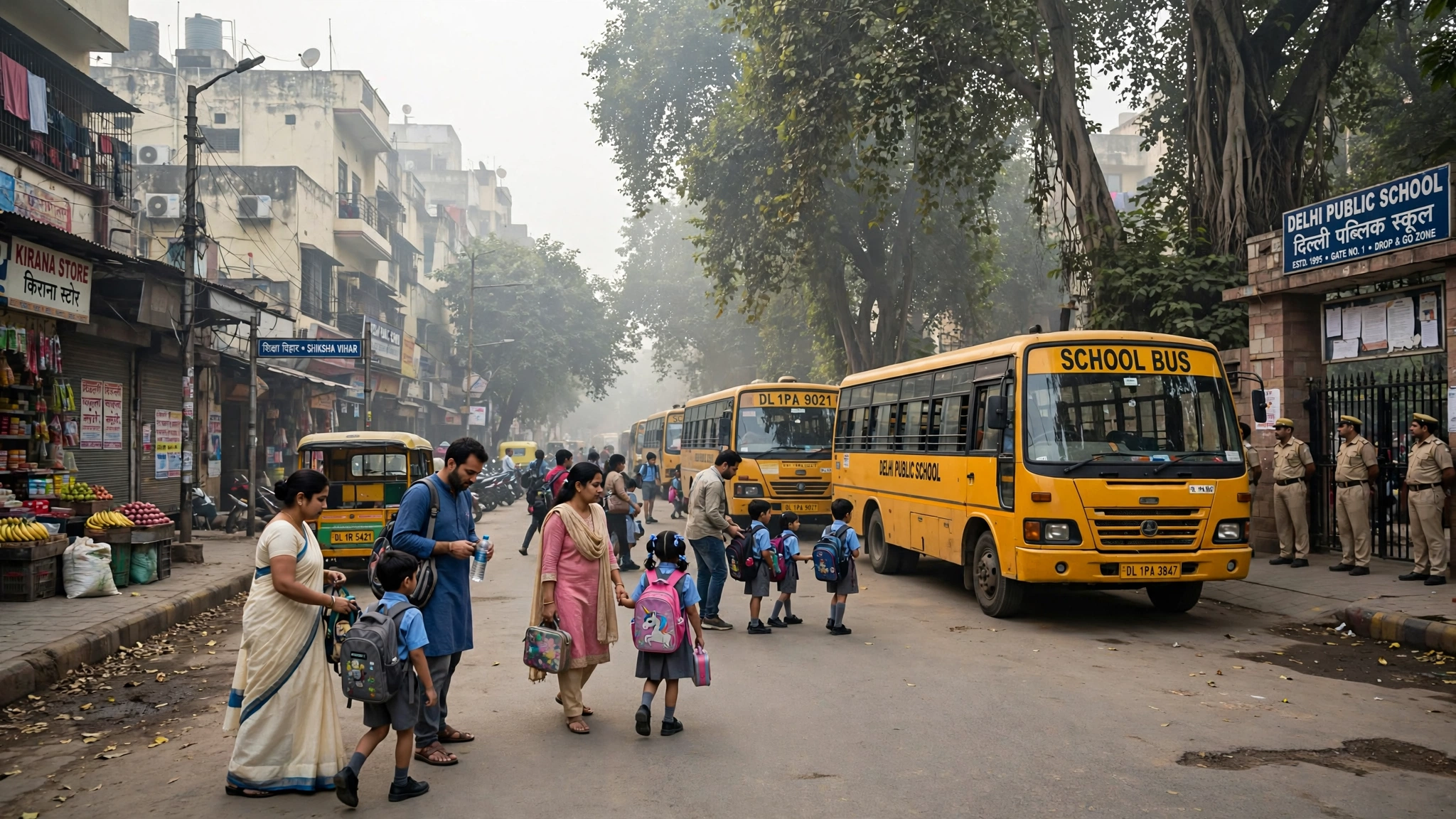
What has not changed: Stages I and II stay in force
The revocation of Stage-III does not mean all GRAP curbs have gone. GRAP Stages I and II remain in force, and the separate CAQM order of 30 October 2026 remains applicable until 20 November 2026. Conditions have improved enough to lift the strictest stage, but not enough to remove the framework altogether.
CAQM expects air quality to stay in the poor to very poor range in the coming days. That forecast is a reminder that the improvement to 204, welcome as it is, still leaves Delhi in air that is unhealthy over a long period. Families with children who have asthma or other breathing difficulties should stay alert to daily readings and to advice from their school or doctor, even as normal classes resume.
What the air looks like right now
On Wednesday 18 November, Delhi’s AQI was recorded at 212 at 5:00 AM, in the Poor category. That reading, taken the morning after the revocation, sits close to the daily average of 204 cited by the CAQM. It confirms the improvement is real but modest, and that the city remains in the poor range rather than moving into moderate or satisfactory air.
A single early-morning reading does not tell the whole story of a day, since air quality moves with traffic, temperature and wind. What it shows, alongside the average of 204, is that the city has stepped out of the severe band without stepping into clean air. That is the context in which schools have reopened and Stages I and II continue. The Delhi AQI update for 18 November 2026 gives the day-by-day picture behind these headline numbers.
What this means for families in the days ahead
The practical effect for most families is simple: school is back to normal. Children attend in person, teachers teach in classrooms, and the hybrid timetable of the last 11 days no longer applies. Regular attendance helps children settle back into learning, catch up with classmates, and return to sports, assemblies and group work that do not translate well to a screen.
At the same time, the coming days call for a measure of caution. Parents may want to keep an eye on morning readings and make sure children with respiratory conditions have their medication and their school informed. More detail on the official decisions is in the Times of India report on Delhi schools resuming physical classes and the Indian Express report on Delhi-NCR schools resuming regular classes.
Conclusion
The reopening of Delhi-NCR schools is a small, concrete sign that the worst of the immediate air emergency has eased. Stage-III was in force for 11 days, from 6 November to its revocation on 17 November, and its lifting has allowed the Directorate of Education in Delhi and the authorities in Gautam Buddha Nagar to restore normal offline teaching across the region. Yet the wider picture has not changed as much as the headline suggests. With Stages I and II still in force, a separate CAQM order running until 20 November, and air quality expected to stay poor to very poor, clean air is still some way off. The return to school is welcome — but keep watching the daily AQI, and take sensible precautions on the days when the air is at its worst.
Read more
Delhi schools reopen: Are Delhi schools fully open for offline classes now?
Yes. After the CAQM revoked GRAP Stage-III on 17 November 2026, the Delhi Directorate of Education directed all government, government-aided, municipal and recognised private schools to discontinue online and hybrid arrangements and restore normal offline teaching with immediate effect.
How long was GRAP Stage-III in force in Delhi?
GRAP Stage-III was imposed on 6 November 2026, ahead of Diwali, and revoked on 17 November 2026, so it was in force for 11 days.
Do the school orders apply outside Delhi as well?
Yes. The directions apply across Delhi and the NCR districts of Gurugram, Faridabad, Ghaziabad and Gautam Buddha Nagar. In Gautam Buddha Nagar, schools in Noida and Greater Noida were directed to restore regular classes, ending the hybrid arrangement for students up to Class 5.
Are all GRAP restrictions now lifted?
No. GRAP Stages I and II remain in force, and the separate CAQM order of 30 October 2026 remains applicable until 20 November 2026. CAQM expects air quality to stay in the poor to very poor range in the coming days, and Delhi’s AQI was recorded at 212 at 5:00 AM on 18 November.

Ayush Choudhary is the Founder & Editor-in-Chief of The Brave India, where he covers India news, state news, local news and government updates. He leads the newsroom’s reporting on markets, technology, sports and public policy, with a focus on accurate, timely stories for readers across the country.