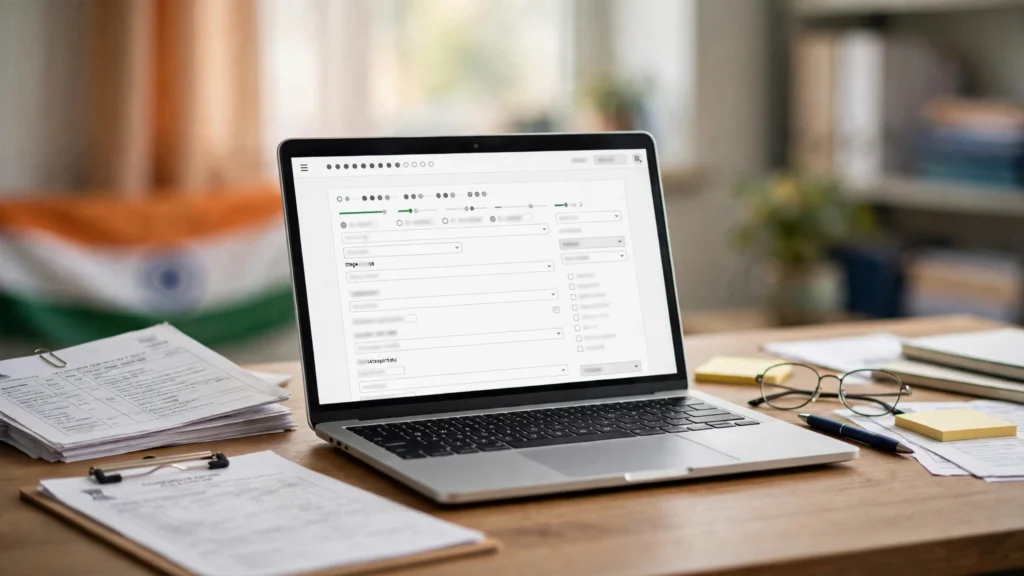
The Census 2027 Other religions list is at the centre of the story. The Census 2027 self-enumeration portal produced its first big talking point within hours of going live. What began as a long drop-down list for people who do not fit into the six named religions has now become a much shorter set of predictive-text suggestions — and the change, its timing, and the explanation behind it are all worth understanding, because this is the form through which millions of Indians will record who they are.
If you live in Uttar Pradesh, Goa, Punjab or Uttarakhand, this is not a distant administrative story. The portal at se.census.gov.in went live on Monday, 16 November 2026, for those four poll-bound states, and self-enumeration there runs till 30 November 2026. Here is what happened, what the government and the Opposition have said, and what it means for anyone using the portal.
What happened when the portal went live
When the self-enumeration portal first opened on 16 November, the religion section worked in a way many users would recognise from an ordinary online form. The question kept seven categories: Hindu, Muslim, Christian, Sikh, Buddhist, Jain, and Others. For anyone who chose “Others”, the portal first showed a drop-down list with 287 entries.
That list was wide-ranging. It included entries such as ISKCON, Ramkrishna Paramhans, Gorak Nath, Sanatan, Vedic Dharm, Ramdev, Bishnoi, Vaishnaw, Shia, Sunni, Sarna, Pentecostal and Methodist — a mix of sects, traditions, movements and denominations, some closely associated with larger faiths, others with distinct identities of their own.
Then, within hours, the list was gone. The change followed a query from The Hindu to the Union Home Ministry. The drop-down was removed, and what replaced it was something quite different — and considerably shorter.
Census 2027 Other religions list: From 287 entries to 76 suggestions
The portal now shows 76 predictive-text suggestions under “Other”. That is a sharp reduction: more than 200 entries from the earlier list have been dropped, leaving a list roughly a quarter of the size of the original.
The character of the list has changed as well as its length. Nearly all of the 76 suggestions now shown are entries already recorded and tabulated from 2011 Census data. Rather than a fresh attempt to list every tradition or denomination a respondent might name, the present set draws heavily on what was already counted and classified in the last Census.
The numbers are the simplest way to hold the story in mind: 287 entries at first, then 76 suggestions, with over 200 entries dropped in between — a change made the same day the portal went live, after a newspaper’s query to the Union Home Ministry.
What the government says: predictive text, not a fixed list
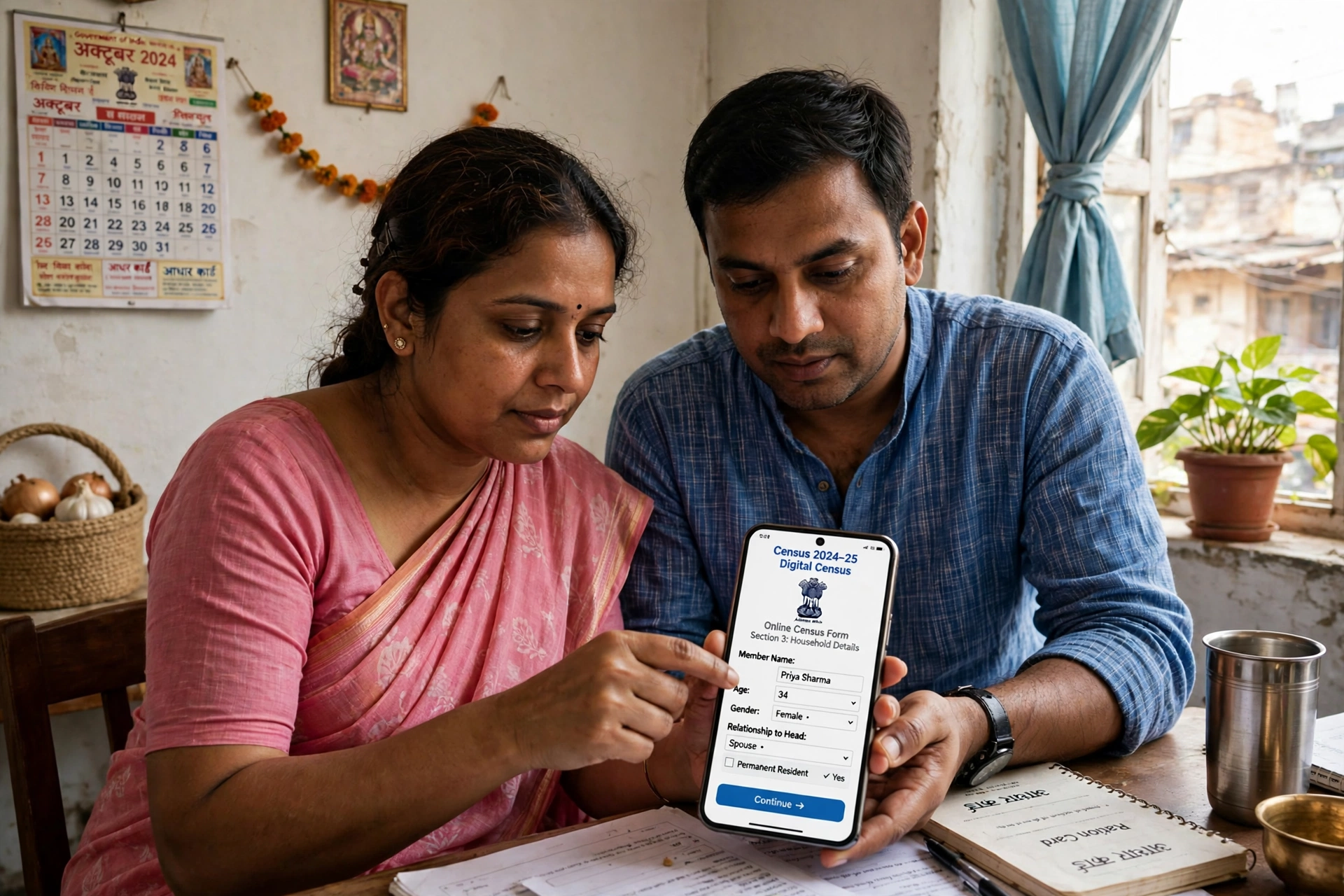
A government official has said the list was meant as predictive text to avoid spelling variations. That explanation goes to the heart of how a self-enumeration form works in practice. When people type their own answers, the same word can be spelled in many different ways, and those variations can make the answers harder to count and compare later. Predictive text — where the form suggests a spelling as you type — is a common way of reducing that problem, by nudging respondents toward a consistent form of words.
The Registrar General’s office has added an important assurance. It says respondents remain free to write any religion, as in earlier censuses. On that account, the 76 suggestions are not a closed list, and a person whose religion is not among them is not prevented from writing it in. The suggestions are there to help with spelling and consistency; the freedom to state one’s own religion, in one’s own words, remains.
That distinction — between a suggestion and a restriction — is the key point. A drop-down invites a reader to pick from what is shown; predictive text offers a suggestion while leaving the field open. The government’s position is that the current arrangement is of the second kind.
Why the Congress calls the exercise a farce
The Congress has criticised the exercise in strong terms. Jairam Ramesh called it a “farce” with “grave implications”, and his criticism went beyond the religion list itself to the wider design of the Census.
One of his central points concerns caste. No drop-down is provided for castes other than SC/ST, he noted — a contrast with the detailed treatment first given to the “Other” religions category. That contrast is significant because Census 2027 is the first time independent India is enumerating caste. The caste question is therefore new, closely watched, and politically sensitive, and the way the form handles it is being read alongside the way it handles religion.
The Congress argument, in short, is that the form’s design choices — what gets a list, what gets a suggestion, what gets no list at all — are not merely technical decisions. They shape what gets counted and how clearly different identities show up in the final figures. When the religion list changed within hours of a newspaper query, that, for the party, reinforced the charge that the exercise is not being run in the careful, settled way a Census requires.
What stays the same — and why it matters
For all the argument about the list, several things have not changed. The religion question still keeps its seven categories: Hindu, Muslim, Christian, Sikh, Buddhist, Jain, and Others. The timetable is also unchanged. The reference date for Census 2027 is 00:00 hrs on 1 March 2027, with 1 October 2026 as the reference date for snow-bound areas. The self-enumeration window for the four poll-bound states runs till 30 November 2026.
What has changed is narrower, but it is not trivial. A respondent in one of those four states who opens the portal today will see 76 predictive-text suggestions where the first users saw a 287-entry drop-down. If their religion is among the 76, the form will suggest it. If it is not, the Registrar General’s office says they remain free to write it in, as in earlier censuses.
It would be easy to treat this as a small technical correction to a website. But the Census feeds into policy, planning, representation and public debate for a decade, so how a question is asked affects what the final numbers can show. Self-enumeration also puts more weight on the form’s design, because there is no enumerator to explain a question — the wording and the suggestions must do that work. Readers tracking official announcements can also follow the Odisha DA hike to 63 percent and the 8th Pay Commission fitment factor discussion.
What to watch next
The most useful thing to watch now is not the argument, but the portal. The self-enumeration window in Uttar Pradesh, Goa, Punjab and Uttarakhand runs till 30 November 2026, and the experience of people using it will tell us more than any statement can about whether the 76 suggestions work as intended. Do respondents find their religion among the suggestions, and do those whose religion is not listed understand that they can write it in?
A second question is whether the list changes again — it has already changed once, within hours of going live. A third concerns the rest of the country: what happens in these four poll-bound states is likely to shape how the portal is presented when it opens more widely. The facts as they stand: a 287-entry drop-down removed after a query to the Home Ministry; 76 suggestions drawn largely from 2011 data; a government explanation of predictive text; an assurance that respondents may write any religion; and a Congress charge of a “farce” with “grave implications”.
Read more
For the full reporting behind this story, see The Hindu: Census 2027 ‘Other’ religions list made predictive text, over 200 entries dropped and The Hindu: Census 2027 turning out to be a farce, says Congress.
What is the Census 2027 ‘Other’ religions list now?
The portal now shows 76 predictive-text suggestions under “Other”. Nearly all were already recorded and tabulated from 2011 Census data. The earlier 287-entry drop-down was removed within hours of The Hindu querying the Union Home Ministry.
Can I write a religion that is not among the 76 suggestions?
Yes, according to the Registrar General’s office. It says respondents remain free to write any religion, as in earlier censuses. The 76 entries are predictive-text suggestions, not a closed list.
Which states can use the self-enumeration portal now, and till when?
The portal at se.census.gov.in went live on 16 November 2026 for four poll-bound states — Uttar Pradesh, Goa, Punjab and Uttarakhand. Self-enumeration there runs till 30 November 2026.
Why has the Congress criticised Census 2027?
Jairam Ramesh called the exercise a “farce” with “grave implications”. He noted that no drop-down is provided for castes other than SC/ST. Census 2027 is the first time independent India is enumerating caste.

Ayush Choudhary is the Founder & Editor-in-Chief of The Brave India, where he covers India news, state news, local news and government updates. He leads the newsroom’s reporting on markets, technology, sports and public policy, with a focus on accurate, timely stories for readers across the country.