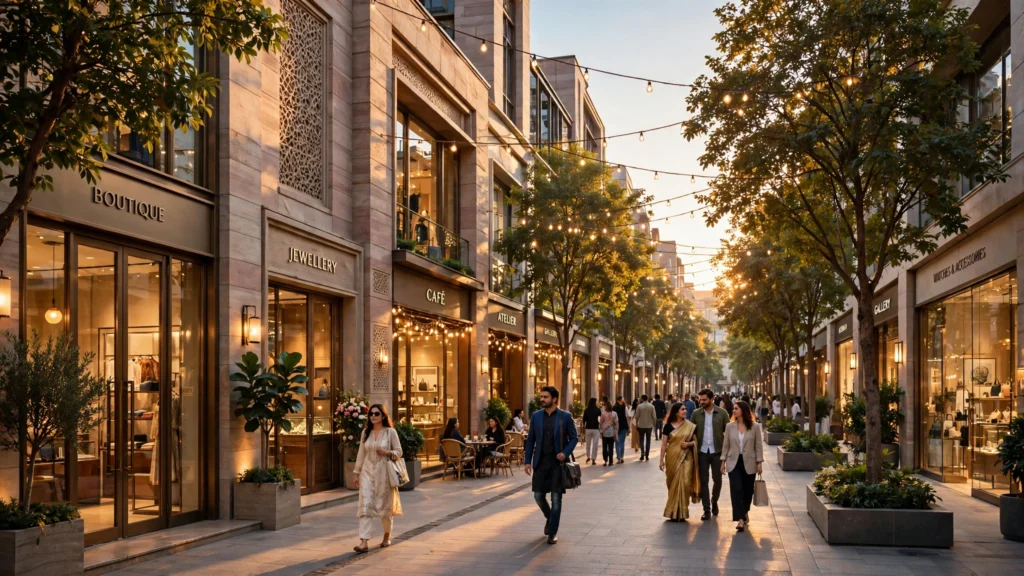
Khan Market most expensive retail street rankings are out again. Walk through Khan Market on a busy evening and the first thing you notice is the squeeze. The pavements are full, the shops are small, and almost every storefront seems to be doing brisk business. Now that everyday scene has a number attached to it again — and it is a large one. Delhi’s Khan Market has held on to its place as the world’s 24th most expensive retail street, and it is still India’s most expensive high street by some distance.
That is the headline from Cushman & Wakefield’s “Main Streets Across the World 2026” report, the 36th edition of the firm’s annual survey, which examines headline rents across 147 leading retail locations worldwide. Staying in the global top 30 is not a one-year fluke. Khan Market is the only Indian location in that top 30, which says as much about the street itself as it does about how scarce prime retail space is in the capital.
What the 2026 ranking actually says
According to the report, Khan Market has retained its position as the world’s 24th most expensive retail street. It also remains India’s most expensive high street, and the only Indian location in the global top 30.
The ranking is based on headline rents — the top rents landlords can command for prime space on each street — across 147 leading retail locations worldwide. It compares the very best pitches, not an average of every shop on every street. That matters, because it is the prime frontage, the most visible and most walked-past shops, that sets the benchmark.
Holding a top-25 global position is a strong signal: for the brands who want to be in Delhi, there is still no substitute for a well-placed shop on a street people already associate with premium shopping.
What $238 per sq ft really means
Annual rents at Khan Market rose 14% year-on-year to about $238 per sq ft, according to the report. In Indian terms, that works out to nearly Rs 1,875 per sq ft per month. For a small shop, that adds up quickly. For a larger store, it becomes one of the biggest fixed costs of doing business, before staff, stock or anything else is paid for.
The rise was driven by strong demand for retail space, the report says. Rents do not climb by 14% in a year because landlords hope they will. They climb when more retailers want space than there is space to give, and when the ones already there would rather stay and pay more than move somewhere cheaper and less visible.

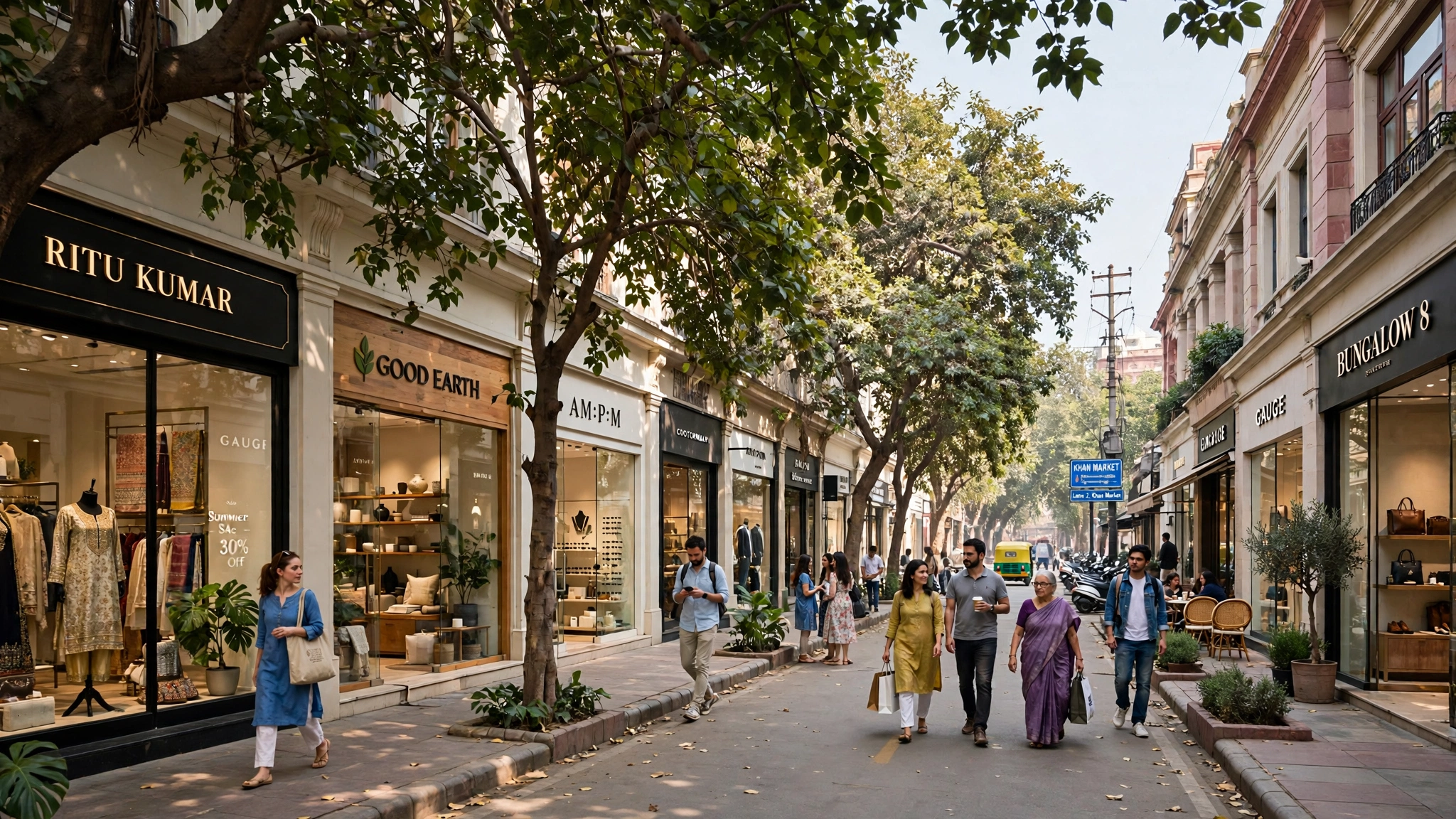
Khan Market most expensive retail street: How Khan Market compares with the world’s priciest streets
Globally, the top of the table has a familiar look, with one big change at the summit. New York’s Upper Fifth Avenue has reclaimed the top spot, with rents rising 35% year-on-year to $2,700 per sq ft annually. That is more than eleven times the headline rent at Khan Market, which gives a sense of how far ahead the very top of the global market sits.
London’s New Bond Street, which Upper Fifth Avenue overtook, is second at $2,230 per sq ft. Milan’s Via Montenapoleone follows at $2,160 per sq ft. Those three streets form a clear leading group, well ahead of the rest of the ranking — and well ahead, in rent terms, of every street in India.
The Indian picture: four streets in the Asia-Pacific list
Khan Market may be the only Indian street in the global top 30, but it is not alone in the regional ranking. In the Asia-Pacific ranking, Khan Market stood 25th. It was followed by Gurugram’s Galleria Market at 28th, with rents of Rs 1,375 per sq ft per month, Connaught Place in New Delhi at 29th, at Rs 1,325 per sq ft per month, and Mumbai’s Linking Road at 33rd.
Three of the four Indian entries are in the Delhi-National Capital Region — Khan Market and Connaught Place in the capital, and Galleria Market in Gurugram — with Linking Road carrying the flag for Mumbai. At nearly Rs 1,875 per sq ft per month, Khan Market sits well above Galleria Market and Connaught Place.
Across the region, prime retail rents rose 3.1% year-on-year in the 12 months to Q3 2026, compared with 2.3% a year earlier. Khan Market’s 14% rise is far above that regional average, which underlines how exceptional demand for space on that one street has been. More detail is covered in Business Standard’s report on Khan Market retaining its 24th spot.

Why rents keep rising despite the price tag
The report’s explanation is short: strong demand for retail space. But it is worth thinking through what that demand looks like on the ground. Prime retail space is scarce by definition. You cannot create more frontage on a street that is already built up, and you cannot move a street to a cheaper part of town and keep its reputation.
When a shop becomes vacant here, there is usually no shortage of retailers who would like to take it. That competition pushes rents up.
What it means for shoppers and for Delhi
For shoppers, a ranking like this rarely changes what a visit feels like on the day. What changes, slowly, is the mix: which shops can afford to stay, which new ones arrive, and what kind of shopping the street becomes known for.
For Delhi, the ranking is also a point of pride and a measure of the city’s place in global retail. Having the country’s most expensive high street, and the only Indian street in the world’s top 30, puts the capital on a list dominated by the world’s best-known shopping cities. The full regional picture is set out in The Telegraph’s report on Khan Market’s ranking, which also notes the positions of the other Indian streets.
Readers tracking prices more broadly can also check the latest gold rate in India and the Sensex today.
Conclusion
Khan Market’s story in this year’s report is, in the end, a story of holding on. It has kept its 24th place in the world, kept its position as India’s most expensive high street, and done so while rents rose 14% in a year to about $238 per sq ft.
The numbers will change again next year. For now, the message is clear: Delhi’s most famous shopping street is still among the most expensive addresses in world retail, and retailers are still willing to pay to be there.
Read more
FAQs
What rank does Khan Market hold among the world’s most expensive retail streets?
Khan Market is ranked 24th in the world in Cushman & Wakefield’s “Main Streets Across the World 2026” report, and it remains India’s most expensive high street.
How much is the rent at Khan Market?
Annual rents at Khan Market rose 14% year-on-year to about $238 per sq ft, which is equivalent to nearly Rs 1,875 per sq ft per month.
Which is the world’s most expensive retail street in 2026?
New York’s Upper Fifth Avenue reclaimed the top spot, with rents rising 35% year-on-year to $2,700 per sq ft annually, ahead of London’s New Bond Street at $2,230 per sq ft and Milan’s Via Montenapoleone at $2,160 per sq ft.
Which other Indian streets appear in the Asia-Pacific ranking?
In the Asia-Pacific ranking, Khan Market stood 25th, followed by Gurugram’s Galleria Market at 28th (Rs 1,375 per sq ft per month), Connaught Place in New Delhi at 29th (Rs 1,325 per sq ft per month) and Mumbai’s Linking Road at 33rd.


Ayush Choudhary is the Founder & Editor-in-Chief of The Brave India, where he covers India news, state news, local news and government updates. He leads the newsroom’s reporting on markets, technology, sports and public policy, with a focus on accurate, timely stories for readers across the country.