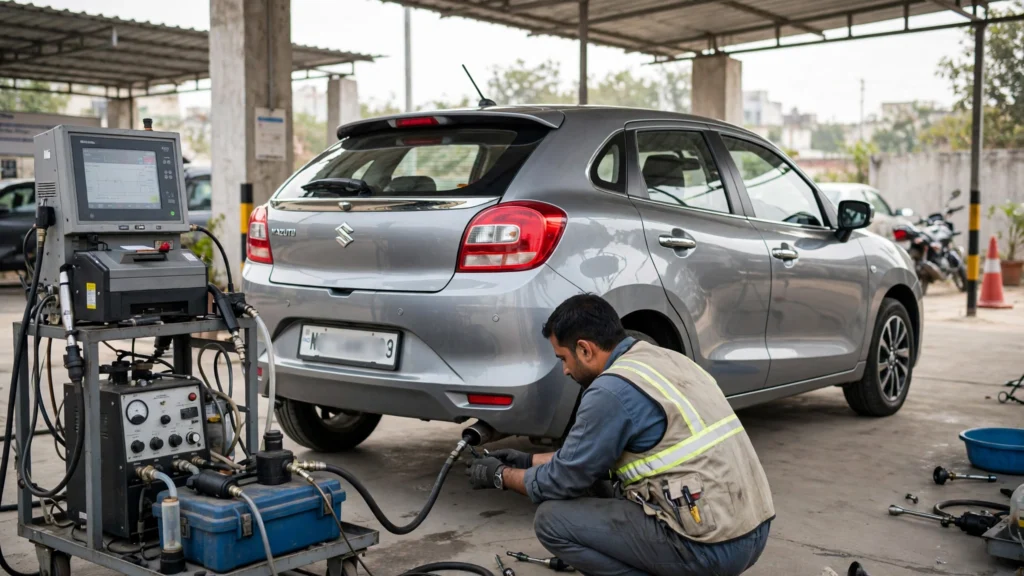
If you own a BS-VI car, your next trip to the pollution checking centre may not come around as often as you are used to. Under the new PUC certificate rules 2026, a private BS-VI vehicle up to six years old will now get a Pollution Under Control certificate valid for three years at a stretch. Older vehicles will need to renew more often — yearly, then every six months past ten years.
This explainer sets out what changed, who gets longer validity, who renews more frequently, and how to work out which bracket your vehicle falls into — all from the notified amendment.
What changed under the new PUC certificate rules 2026
The Ministry of Road Transport and Highways (MoRTH) notified the Central Motor Vehicles (Sixteenth Amendment) Rules, 2026 on 13 November. The amendment changes the Central Motor Vehicles Rules, 1989, framed under the Motor Vehicles Act, 1988, and is reported as an amendment to Rule 115. The new rules came into force on publication in the Official Gazette, as reported on 19 November.
The core idea is simple: how long your PUC certificate stays valid now depends on the emission standard of your vehicle (BS-VI, BS-IV or older) and its age. Newer, cleaner vehicles get longer validity; older vehicles get checked more often.
One thing has not changed. A valid PUC certificate is still required, still issued and renewed by a state-authorised agency, and still to be produced on demand before authorised officers. Only the renewal cycle has changed.
The new validity table at a glance
Here is the complete PUC validity BS-VI vehicles owners need to know, along with the rules for older emission standards:
| Vehicle type | Age of vehicle | PUC validity |
|---|---|---|
| Private (non-transport) BS-VI | Up to 6 years | 3 years |
| Private (non-transport) BS-VI | More than 6 years, up to 10 years | 1 year (renew every year) |
| Private (non-transport) BS-VI | More than 10 years | 6 months (renew every 6 months) |
| Transport BS-VI | Up to 6 years | 2 years |
| Transport BS-VI | More than 6 years, up to 10 years | 1 year (renew every year) |
| Transport BS-VI | More than 10 years | 6 months (renew every 6 months) |
| BS-IV | All ages | 6 months |
| BS-I, BS-II, BS-III | All ages | 3 months |
The pattern is easy to remember. For BS-VI vehicles, the first six years carry the longest validity. Between six and ten years, renewal becomes annual. After ten years, it is PUC renewal every 6 months for both private and transport vehicles. Older standards stay on short cycles: six months for BS-IV, three months for BS-I, BS-II and BS-III.

How PUC certificate vehicle age is counted
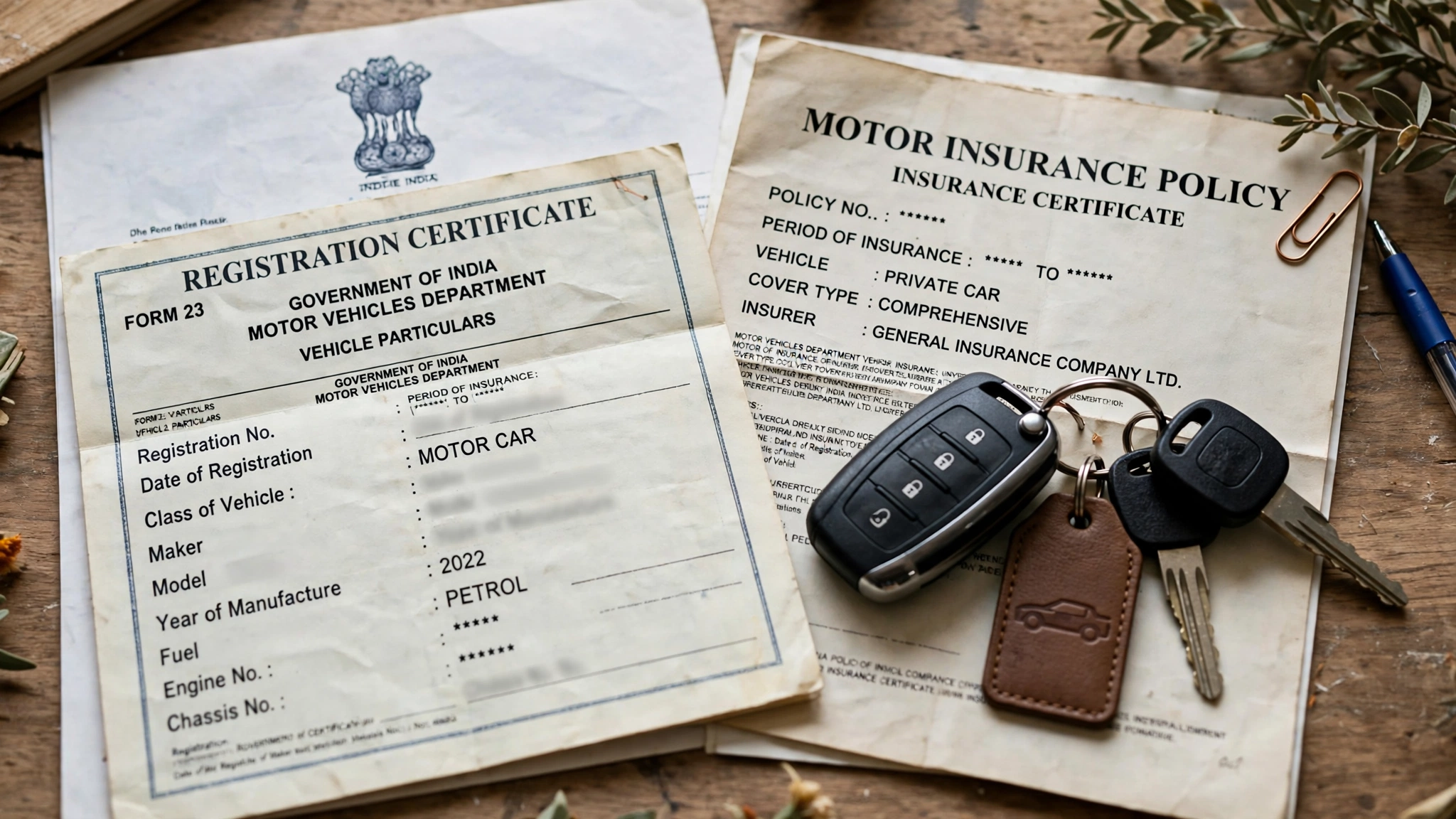
This is the detail that decides everything else. Under the amended rules, the age of your vehicle is calculated from the date of first registration — not from when you bought it second-hand, and not from the manufacturing year alone.
So a BS-VI private car first registered in 2021 is five years old in 2026 and sits in the three-year bracket. The same car first registered in 2019 is seven years old and moves to yearly renewal. Past ten years from first registration, renewal becomes every six months.
Private BS-VI vehicles
For non-transport BS-VI vehicles — your personal car — the ladder is: three years of validity up to age six, renewal every year between six and ten years, and every six months beyond ten years.
Transport BS-VI vehicles
Transport BS-VI vehicles get a shorter first stretch: two years up to six years of age. After that, the ladder matches private vehicles — yearly from six to ten years, every six months after ten.
BS-IV and older vehicles
There is no age ladder for older standards. BS-IV vehicles carry six months of validity; BS-I, BS-II and BS-III vehicles carry three months. If you drive an older vehicle, your renewal cycle stays short regardless of how well maintained it is.
Check your vehicle in three steps
You do not need any special tool to work out your position. Follow the rules in order:
Step 1: Find your first registration date. It is on your registration certificate. Count the years from that date to today — that is your PUC certificate vehicle age under the new rules.
Step 2: Note your emission standard and vehicle type. BS-VI, BS-IV or older? Private (non-transport) or transport? These two facts, plus the age from Step 1, place you in exactly one row of the table.
Step 3: Match your row. A private BS-VI car first registered eight years ago falls in the six-to-ten-year bracket and renews every year. A transport BS-VI vehicle first registered four years ago gets two-year validity. A BS-IV vehicle, whatever its age, renews every six months.
One important catch: existing certificates are not automatically extended. Your current certificate runs to its existing expiry date; the new validity applies at your first renewal after the amended rules commenced. So there is nothing to redo today — the change arrives at your next renewal.

Renewal timing: the 10-day rule
The amendment also settles a small but practical question: from when does a renewed certificate count?
Renew within 10 days before your existing certificate expires, and the renewed certificate takes effect from the existing expiry date — renewing a few days early costs you no validity. Renew after the expiry date, and the new certificate takes effect from the renewal date, with no backdating. The sensible habit under the new rules is to renew inside that 10-day window.
For the full notified detail, you can read Business Standard’s report on the new PUC validity for BS-VI vehicles and Outlook India’s explainer on how the rules change validity from BS-I to BS-VI.
What has not changed
It is worth being clear about the limits of this change. The Central Motor Vehicles Sixteenth Amendment Rules 2026 change the validity period — they do not remove the requirement itself. Every vehicle covered still needs a valid PUC certificate from a state-authorised agency, produced on demand before authorised officers.
Nor does the amendment rewrite your current certificate. The expiry date printed on the certificate you hold today stands. The new cycles apply from your first renewal after the amended rules came into force.
Conclusion
The new PUC certificate rules 2026 reward newer, cleaner vehicles with time. A private BS-VI vehicle up to six years old now needs a pollution check once in three years, a transport BS-VI vehicle once in two. From six to ten years, renewal is annual; beyond ten years — and for all BS-IV vehicles — it is every six months, while BS-I to BS-III vehicles stay at three months.
To know where you stand, count your vehicle’s age from its first registration date, match it against the table, and renew within 10 days before expiry. That is the whole change — no new certificate needed today, and no automatic extension of the one in your glovebox.
Read more
PUC Certificate BS-VI Vehicles Vehicle Rules 2026 MoRTH Pollution Under Control
What is the PUC validity for a private BS-VI car under the new rules?
A private (non-transport) BS-VI vehicle up to 6 years old gets 3 years of validity. Between 6 and 10 years it must renew every year, and after 10 years every 6 months. Age is counted from the date of first registration.
Has my existing PUC certificate been extended automatically?
No. Existing certificates are not auto-extended and run to their current expiry date. The new validity period applies on the first renewal after the amended rules commenced.
What is the PUC validity for BS-IV and older vehicles?
BS-IV vehicles get 6 months of validity. BS-I, BS-II and BS-III vehicles get 3 months. These shorter cycles apply regardless of vehicle age.
From when does a renewed PUC certificate take effect?
If you renew within 10 days before expiry, the renewed certificate is effective from the existing expiry date. If you renew after expiry, it is effective from the renewal date.


Ayush Choudhary is the Founder & Editor-in-Chief of The Brave India, where he covers India news, state news, local news and government updates. He leads the newsroom’s reporting on markets, technology, sports and public policy, with a focus on accurate, timely stories for readers across the country.