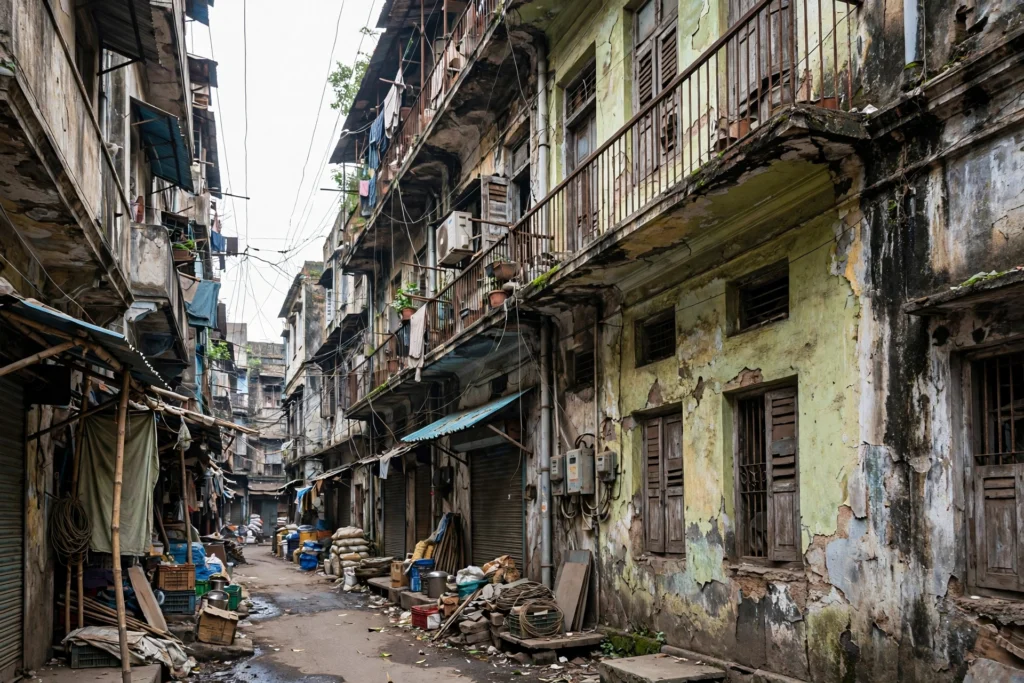
The Bombay HC Dawood building demolition stay has paused, for now, the pulling down of a dilapidated south Mumbai building that was once the residence of Dawood Ibrahim. On Thursday, 19 November 2026, the Bombay High Court passed an interim order staying the demolition until 25 November, only hours after the Brihanmumbai Municipal Corporation (BMC) had begun work on the structure that morning. The court directed all parties to maintain status quo until the next hearing, saying the matter involves highly disputed facts that require a proper hearing. Here is which building is involved, why the court intervened, what C-1 means, and what happens on 25 November.
Bombay HC Dawood Building Demolition Stay: What the Court Ordered
A bench of Chief Justice Mahesh Chandra Tripathi and Justice Advait Sethna heard the matter on Thursday and granted interim relief, observing that the case involves highly disputed facts and needs a proper hearing before any irreversible step is taken.
The court said, “Let the matter stand over to Wednesday (November 25). Till the next date of listing, parties shall maintain the status quo.”
In practical terms, the demolition cannot proceed further until the court takes up the matter again on 25 November. It is an interim arrangement, not a final decision on the building’s fate. Both the Deccan Herald report, based on PTI and the Economic Times report, also based on PTI record that the order came the same day the BMC had begun work in the morning.
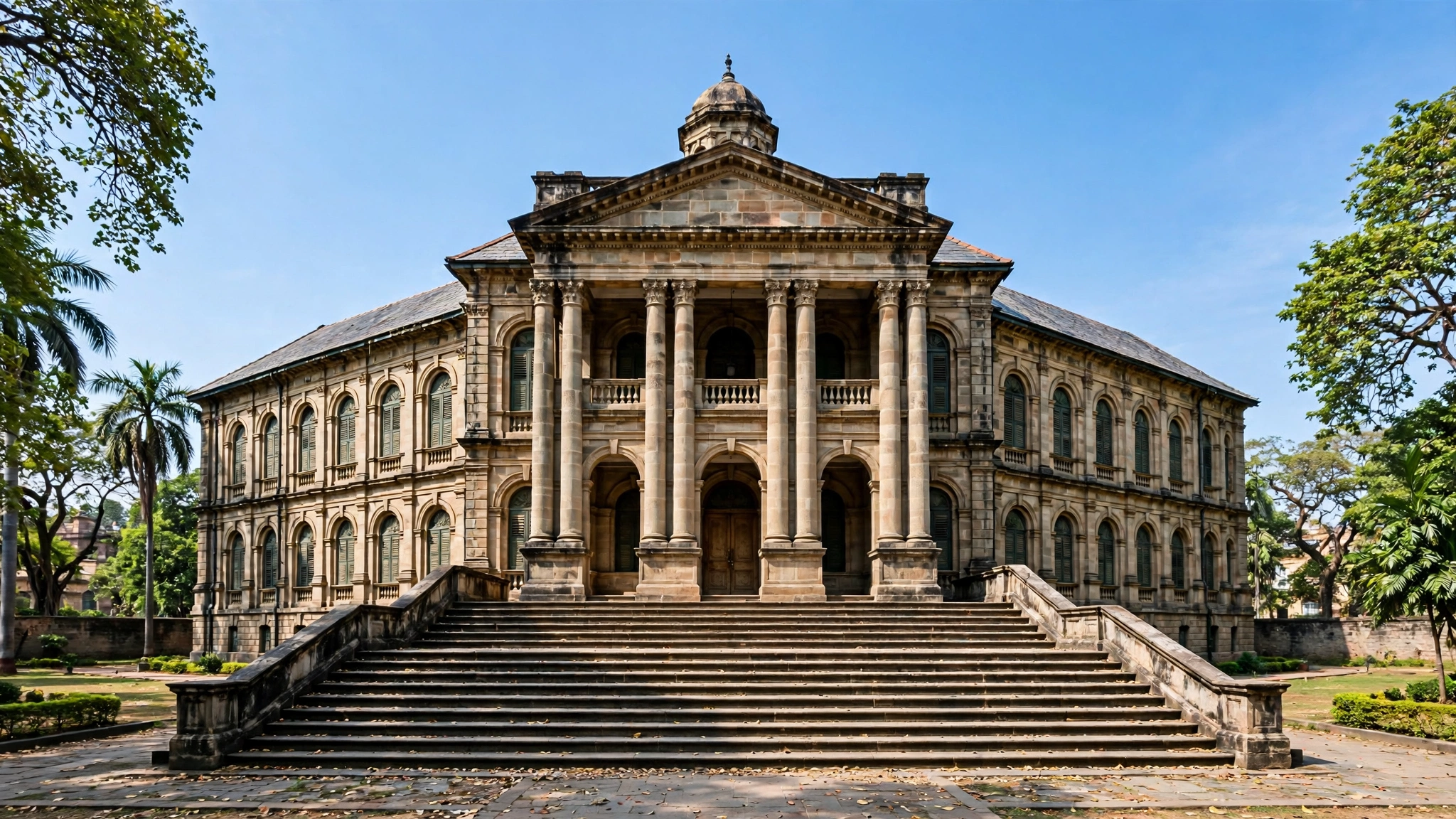

Why an interim stay matters in demolition cases
Demolition is different from many other administrative actions because once a building is brought down, a later court order cannot restore it. Courts therefore often pause such work when the underlying facts are themselves in dispute — the context for the bench’s phrase “highly disputed facts” and its decision to hear the matter properly on the next date.
Which Building Is It? Haji Ismail Haji Habib Musafirkhana, Pakmodia Street
The building at the centre of the dispute is the Haji Ismail Haji Habib Musafirkhana on Pakmodia Street in Bhendi Bazaar, south Mumbai, classified C-1 — a dangerous structure requiring demolition.
The petition was filed by Shaikh Abdul Razak and Amirali Vazirali Panjwani, who claim to be beneficiaries of the Haji Ismail Haji Habib Musafirkhana Trust, a Waqf institution. They challenged the vacate notices issued for the building.
What the petitioners contend
According to the plea, as reported, the property was dedicated in 1864 by Haji Ismail Haji Habib as a Musafirkhana — a rest house for Haj pilgrims — along with a mosque. The petitioners contend that it is Waqf property, that the demolition is contrary to Supreme Court orders, and that court orders and due procedure were disregarded.
These remain the petitioners’ contentions. The court has recorded no findings on their merits at this interim stage; it has only said the facts are highly disputed. The dispute is also reported to be linked to redevelopment by the Saifee Burhani Upliftment Trust (SBUT).
The Building’s Link to Dawood Ibrahim, as Reported
The wider attention stems from the building’s reported past. According to PTI reports, Dawood Ibrahim and his family lived here in the 1970s, before he fled India in 1986. PTI describes him as an underworld don and the mastermind of the 1993 serial blasts — PTI’s characterisation, reproduced as reported.
The legal dispute before the court, however, is about the building itself — its classification, the notices issued for it, and the petitioners’ claims about its Waqf status. The interim order decides none of those questions; it only freezes the position until 25 November.
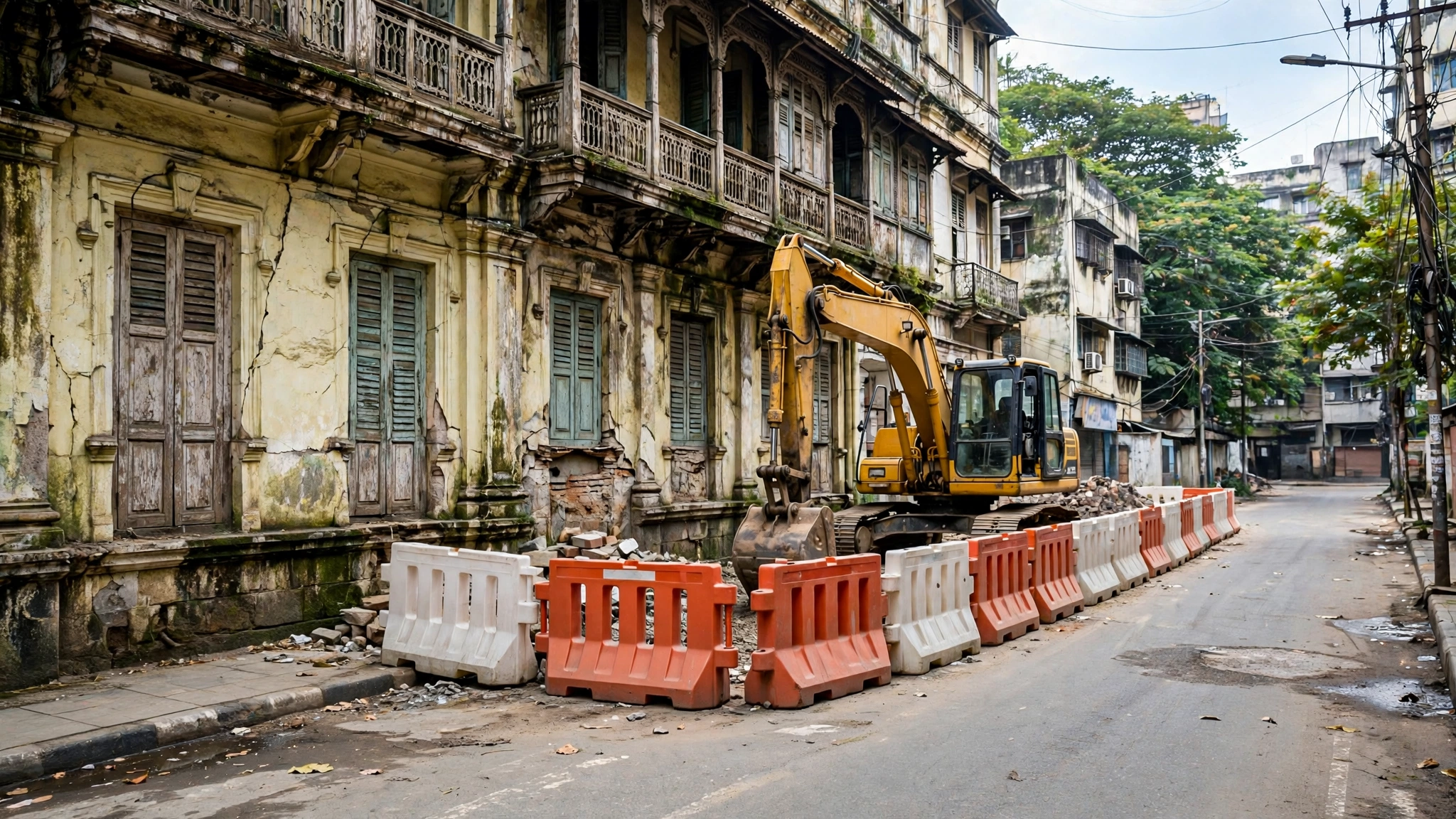
What Does C-1 Mean in a BMC C-1 Building Demolition?
Mumbai’s municipal corporation categorises old and unsafe buildings after structural audits. C-1 is the most serious category: the structure has been found dangerous and requires demolition rather than repair. Occupants are typically issued vacate notices, after which demolition can follow.
That classification is the basis on which the BMC began its action on Thursday morning. A C-1 tag does not, by itself, settle separate legal questions about a property, such as claims over its Waqf status — which is why the petitioners’ challenge to the vacate notices brought the matter to the High Court.
Timeline: From an 1864 Dedication to the November 25 Hearing
- 1864: According to the plea, Haji Ismail Haji Habib dedicated the property as a Musafirkhana (rest house for Haj pilgrims) with a mosque.
- 1970s: PTI reports state Dawood Ibrahim and his family lived in the building.
- 1986: PTI reports state he fled India.
- Thursday, 19 November 2026, morning: The BMC began pulling down the C-1 structure.
- Thursday, 19 November 2026, later: The Bombay High Court bench stayed the demolition and directed status quo.
- Wednesday, 25 November 2026: Further hearing.
What happens next
On 25 November, the court is expected to hear the matter further. Until then, the status quo direction keeps the demolition paused. Whether the interim protection continues, is modified, or is vacated will depend on the arguments placed before the court; neither side’s claims should be treated as established until it rules.
Conclusion
The Bombay High Court’s interim order has, for the moment, stopped the demolition of the Haji Ismail Haji Habib Musafirkhana on Pakmodia Street — a C-1 building that PTI reports was once the Mumbai home of Dawood Ibrahim in the 1970s. The bench intervened hours after the BMC began work on Thursday morning, holding that the matter involves highly disputed facts needing a proper hearing. The petitioners’ contentions — that the property is Waqf property dedicated in 1864 and that court orders and procedure were disregarded — remain to be tested. All eyes now turn to 25 November, when the future of the Dawood Ibrahim former home Mumbai building will be argued on its merits.
Read more
Bombay High Court Dawood Ibrahim Bhendi Bazaar BMC Demolition Musafirkhana
Which building’s demolition has the Bombay High Court stayed?
The Haji Ismail Haji Habib Musafirkhana on Pakmodia Street in Bhendi Bazaar, south Mumbai. PTI reports state that Dawood Ibrahim and his family lived there in the 1970s before he fled India in 1986.
Why did the court stay the demolition?
The bench of Chief Justice Mahesh Chandra Tripathi and Justice Advait Sethna said the matter involves highly disputed facts requiring a proper hearing, and directed all parties to maintain status quo until the next hearing on 25 November 2026.
What does the C-1 classification mean?
C-1 is Mumbai’s most serious building-safety category. It means the structure has been classified as dangerous and requiring demolition, which was the basis for the BMC’s action.
What happens on November 25?
The matter is listed for further hearing on Wednesday, 25 November 2026. The status quo direction stays in force until then; the court will decide the next step after hearing the parties.


Ayush Choudhary is the Founder & Editor-in-Chief of The Brave India, where he covers India news, state news, local news and government updates. He leads the newsroom’s reporting on markets, technology, sports and public policy, with a focus on accurate, timely stories for readers across the country.